

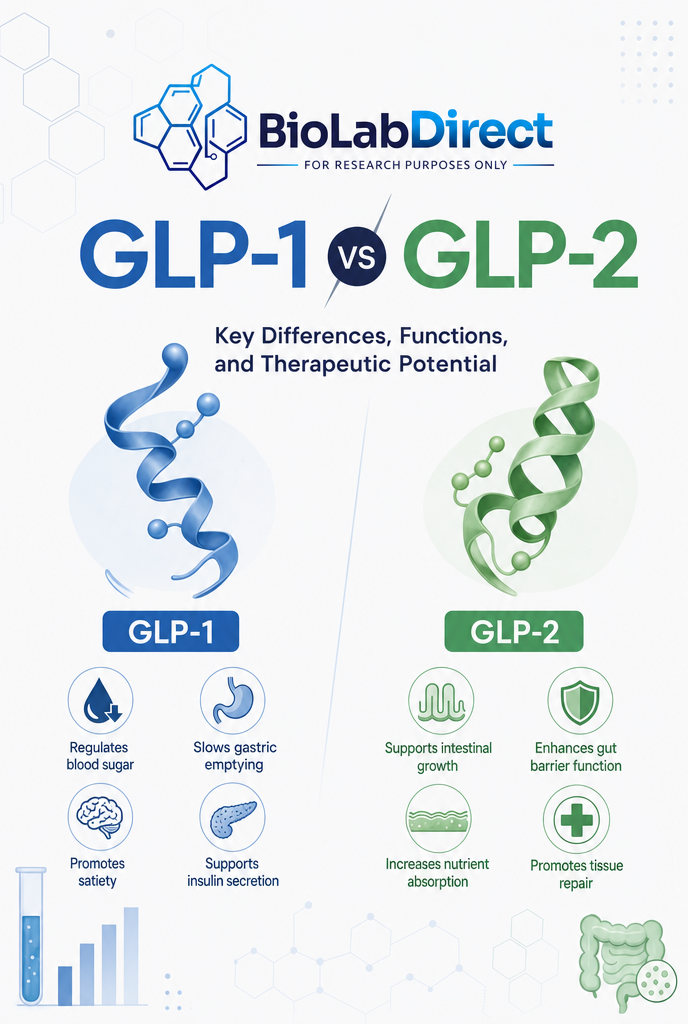
Glucagon-like peptide-1 (GLP-1) and glucagon-like peptide-2 (GLP-2) are closely related intestinal hormones, but they perform distinctly different roles in the human body. Both are produced from the same larger precursor protein, known as proglucagon, and are released primarily from enteroendocrine L cells after food enters the digestive tract.
Despite their shared origin, GLP-1 is best known for regulating blood glucose, appetite, and gastric emptying, while GLP-2 primarily supports intestinal growth, barrier integrity, and nutrient absorption.
What Is GLP-1?
GLP-1 is an incretin hormone, meaning it helps the body manage blood glucose after eating. When glucose levels rise, GLP-1 enhances glucose-dependent insulin secretion from pancreatic beta cells. It also suppresses inappropriate glucagon release, which helps reduce excess glucose production by the liver.
In addition to its effects on blood sugar, GLP-1 slows gastric emptying and acts on appetite-regulating pathways in the brain. These actions can increase feelings of fullness, reduce hunger, and lower overall food intake.
These physiological effects have made the GLP-1 receptor an important therapeutic target. GLP-1 receptor agonists include medications such as:
- Semaglutide
- Liraglutide
- Dulaglutide
- Exenatide
Depending on the specific medication and formulation, GLP-1 receptor agonists may be prescribed for type 2 diabetes, chronic weight management, or the reduction of certain cardiovascular and kidney-related risks.
Tirzepatide is also frequently discussed alongside GLP-1 medications. However, it is technically a dual glucose-dependent insulinotropic polypeptide, or GIP, and GLP-1 receptor agonist rather than a GLP-1-only medication.
Because GLP-1 stimulates insulin primarily when glucose levels are elevated, these medications generally have a relatively low intrinsic risk of hypoglycemia. The risk may increase when they are combined with insulin or medications such as sulfonylureas.
What Is GLP-2?
GLP-2 is also released after nutrient intake, but its principal target is the gastrointestinal tract rather than blood-glucose regulation.
GLP-2 promotes the growth and maintenance of the intestinal mucosa—the inner lining responsible for absorbing nutrients and fluids. Its effects may include increasing villus height and absorptive surface area, improving intestinal blood flow, reducing epithelial cell death, and supporting the intestinal barrier.
GLP-2 can also slow gastrointestinal transit, providing the intestines with more time to absorb nutrients and fluids.
The primary established clinical application of GLP-2 signaling is the treatment of short bowel syndrome with intestinal failure. Short bowel syndrome can occur when a significant portion of the small intestine has been surgically removed or is no longer functional. As a result, affected patients may be unable to absorb enough water, electrolytes, and nutrients through normal digestion.
Teduglutide is a longer-acting GLP-2 analog approved by the U.S. Food and Drug Administration for adults and children at least one year old with short bowel syndrome who depend on parenteral support. By supporting adaptation of the remaining intestine, teduglutide may reduce the volume or frequency of intravenous nutrition and fluids required by certain patients.
GLP-1 vs. GLP-2 at a Glance
| Feature | GLP-1 | GLP-2 |
|---|---|---|
| Primary function | Blood-glucose regulation, satiety and delayed gastric emptying | Intestinal growth, repair and absorption |
| Major target tissues | Pancreas, brain, stomach and other metabolic tissues | Primarily the intestinal tract |
| Effect on appetite | Usually decreases appetite | Not primarily an appetite-regulating hormone |
| Main therapeutic use | Type 2 diabetes and obesity, with additional product-specific indications | Short bowel syndrome with dependence on parenteral support |
| Representative treatments | Semaglutide, liraglutide and dulaglutide | Teduglutide |
| Expected effect on weight | Often produces weight loss | Not intended as a weight-loss treatment |
Although the two hormones are released together, their separate receptors and tissue-specific actions explain why GLP-1 and GLP-2 medications are used for entirely different medical conditions.
Side Effects and Safety Considerations
GLP-1 receptor agonists commonly cause gastrointestinal symptoms such as nausea, vomiting, diarrhea, constipation, abdominal discomfort, and reduced appetite. These effects are often most noticeable when treatment begins or when the dose is increased.
Depending on the medication, prescribing information may also include warnings regarding pancreatitis, gallbladder disease, dehydration-related kidney injury, severe gastrointestinal reactions, and hypoglycemia when combined with certain diabetes treatments.
Semaglutide products carry a boxed warning concerning thyroid C-cell tumors observed in rodents. They are contraindicated in individuals with a personal or family history of medullary thyroid carcinoma or multiple endocrine neoplasia syndrome type 2.
Teduglutide has a different risk profile because it stimulates intestinal growth and increases absorption. Important potential complications include intestinal obstruction, fluid overload, biliary or pancreatic disease, and the possible acceleration of abnormal or neoplastic cell growth.
Patients receiving teduglutide generally require gastrointestinal screening and ongoing laboratory and clinical monitoring under the supervision of a specialist experienced in intestinal failure.
References
- Nauck MA, Meier JJ. Incretin hormones: Their role in health and disease. Diabetes, Obesity and Metabolism.
- Drucker DJ. Mechanisms of Action and Therapeutic Application of Glucagon-like Peptide-1. Cell Metabolism.
- Müller TD, et al. Glucagon-like peptide 1: Molecular mechanisms and clinical applications. Molecular Metabolism.
- Brubaker PL. Glucagon-like Peptide-2 and the Regulation of Intestinal Growth and Function. Comprehensive Physiology.
- U.S. Food and Drug Administration. Wegovy—semaglutide prescribing information.
- U.S. Food and Drug Administration. Gattex—teduglutide prescribing information.
- Jeppesen PB, et al. Teduglutide, a novel glucagon-like peptide-2 analog, in the treatment of patients with short bowel syndrome. Gut.