

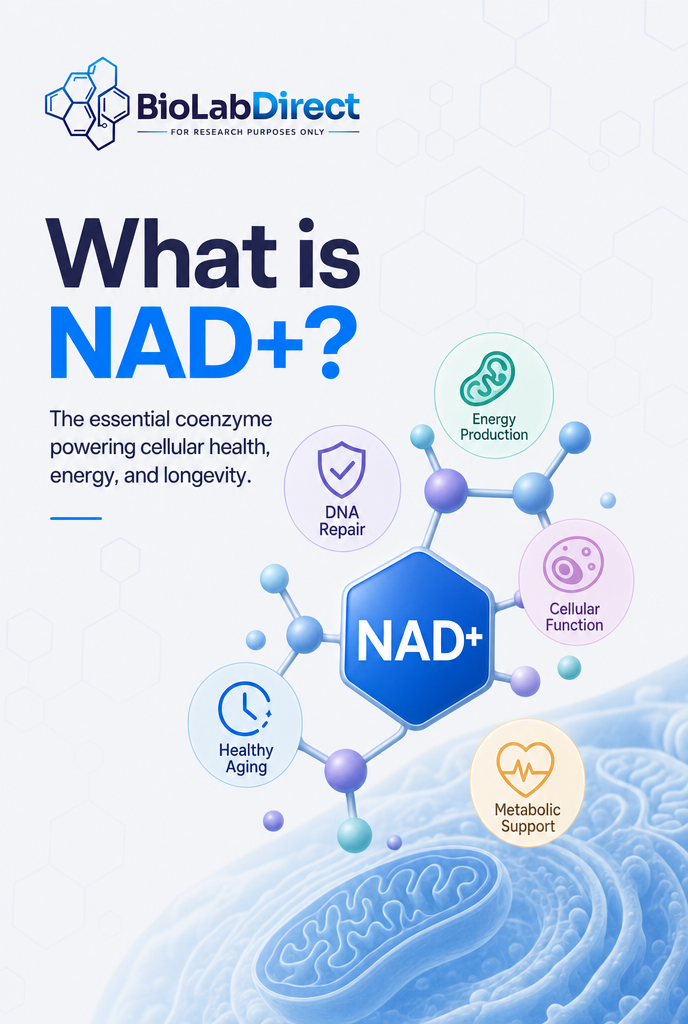
Nicotinamide adenine dinucleotide, commonly abbreviated as NAD+, is a naturally occurring coenzyme found in every living cell. It is essential to the chemical reactions that allow the body to convert carbohydrates, fats and proteins into usable cellular energy. NAD+ also participates in DNA repair, gene regulation, cellular stress responses and communication between cells. Because of these wide-ranging functions, NAD+ has become a major focus of research in metabolism, healthy aging and age-related disease.
Although NAD+ is often marketed as an “anti-aging molecule,” it is not a hormone, stimulant or conventional vitamin. Instead, it is a vitamin-derived coenzyme that the body continually produces, uses and recycles.
How NAD+ Supports Cellular Energy
NAD exists primarily in two interconvertible forms: NAD+ and NADH. NAD+ is the oxidized form, meaning it can accept electrons during metabolic reactions. After accepting electrons and hydrogen, it becomes NADH. NADH can then transfer those electrons into pathways involved in producing adenosine triphosphate, or ATP—the primary energy currency used by cells.
This NAD+/NADH cycle is especially important within the mitochondria, the cellular structures responsible for much of the body’s energy production. Without an adequate supply of NAD+, core metabolic pathways such as glycolysis, the citric acid cycle and oxidative phosphorylation cannot operate normally.
According to the National Institutes of Health, more than 400 enzymes require NAD to help catalyze reactions in the body. In addition to supporting energy metabolism, NAD-dependent enzymes contribute to genome maintenance, gene expression and cellular signaling.
NAD+ and Cellular Maintenance
NAD+ is also consumed by several families of signaling enzymes. These include sirtuins, which help regulate metabolism and cellular stress responses; poly(ADP-ribose) polymerases, or PARPs, which participate in repairing DNA damage; and enzymes such as CD38, which are involved in immune and calcium signaling.
These pathways have generated significant scientific interest because they influence how cells respond to injury, inflammation, metabolic stress and accumulated DNA damage. When NAD+ availability is reduced, cells may have less capacity to support energy production and repair processes simultaneously.
Does NAD+ Decline With Age?
Many animal studies have reported lower NAD+ concentrations with aging, and disruptions in NAD+ metabolism have been associated with metabolic dysfunction, inflammation and impaired tissue maintenance. However, the evidence in humans is more complex. NAD+ levels can differ among tissues, and researchers do not yet have a complete picture of how consistently NAD+ declines throughout the human body or how directly those changes contribute to age-related symptoms.
This distinction is important. Findings in mice have helped researchers identify promising biological mechanisms, but they do not prove that raising NAD+ will slow human aging, prevent disease or extend lifespan. Recent scientific reviews conclude that human evidence remains limited and that larger, longer and more tissue-specific clinical trials are needed.
How Does the Body Make NAD+?
The body can synthesize NAD+ from several dietary and metabolic sources. Vitamin B3 compounds—including nicotinic acid and nicotinamide—can be converted into NAD+. The amino acid tryptophan can also contribute to NAD+ production, primarily in the liver.
Two additional compounds, nicotinamide riboside, or NR, and nicotinamide mononucleotide, or NMN, are known as NAD+ precursors because cells can use them to produce NAD+. NR and NMN have therefore become common ingredients in supplements marketed for energy, recovery, cognition and longevity.
Foods that provide niacin or tryptophan include poultry, fish, beef, peanuts, legumes, whole grains and fortified cereals. For most people, a balanced diet supplies enough vitamin B3 to prevent nutritional deficiency. However, maintaining normal niacin status is not the same as proving that high-dose precursor supplementation provides additional clinical benefits.
This article is intended for educational purposes and should not be considered a substitute for professional medical advice, diagnosis or treatment.
References
- National Institutes of Health Office of Dietary Supplements — Niacin: Fact Sheet for Health Professionals
- Covarrubias AJ, et al. NAD+ Metabolism and Its Roles in Cellular Processes During Ageing
- Vinten KT, et al. NAD+ Precursor Supplementation in Human Ageing
- Martens CR, et al. Chronic Nicotinamide Riboside Supplementation Is Well-Tolerated and Elevates NAD+ in Healthy Adults
- Yoshino M, et al. Nicotinamide Mononucleotide Increases Muscle Insulin Sensitivity in Prediabetic Women
- Freeberg KA, et al. Dietary Supplementation With NAD+-Boosting Compounds in Humans
- Grant R, et al. Changes in the Human Plasma and Urine NAD+ Metabolome During Intravenous NAD Infusion
- U.S. Food and Drug Administration — FDA Reminds Compounders to Use Ingredients Suitable for Sterile Compounding